Precedent Studies
Cannock Mill Cohousing-
https://www.facebook.com/cannockmillcohousing/
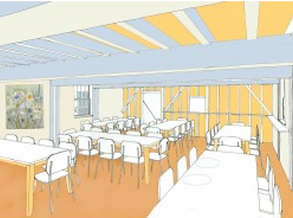
Cannock Mill Cohousing is a successful cohousing project with aspects that we also implement within our own work. They collectively decide what facilities they have and need. This includes a common house where they can cook and eat together. They also have guest rooms, laundry rooms, and spaces for activities such as music/ dancing, meditation, and a lot more. The community share a lot of stuff amongst themselves which include gardening, e-bikes, and cars. The aim of Cannock Mill Cohousing is to become an eco-efficient project by creating low energy homes, becoming water efficient, solar power generation, growing fruit and veg, in other words they call it ‘living lightly’. Living at Cannock Mill is based off a membership which allows you plenty of time to see whether it is or is not for you. Cannock Mill is not supported by any external funding’s either.
-
Architect: Anne Thorne Architects.
-
Grade II listed Cannock Mill
-
Using the existing mill for the common house.
-
Timber Cassette Structures.
-
Cellulose insulation
-
MVHR
-
40+ age bracket
-
Shared kitchen
-
Communal gardens
-
Car-pooling
-
9712 m2 site
https://www.passivhaustrust.org.uk/news/detail/?nId=796
http://cannockmillcohousingcolchester.co.uk/our-future-community-at-cannock-mill/
Marmalade lane –
Marmalade lane is a cohousing project that was launched recently in 2018. It consists of many modern homes and the residents benefit from shared facilities such as a large, shared garden and more. To keep the area clean and pollution free they have a car free lane that runs through the site. The car park is kept to the periphery and the bins are in communal stores. This is conserving the outside space for the resident’s enjoyment. Marmalade lane uses sustainable raw materials, passive energy design principles and the Trivselhis Climate Shield building systems to produce energy efficient homes that have a small environmental footprint. The timbre used is from Sweden and are slow grown from sustainably managed forests where three trees are planted for every one that is harvested. Triple- glazed, argon filled, and aluminium clad windows are fitted into the wall panels for maximum airtightness and soundproofing. MVHR systems which produce clean air whilst reducing heat loss, as well as renewable energy generated by air-source heat pumps.
https://www.wearetown.co.uk/developments/marmalade-lane/
-
Architect – Mole Architects.
-
Added an additional pedestrian street to make the area clean. Named it Marmalade Lane.
-
Parking outside the site
-
Green spaces designed for children
-
Communal facilities
-
Cross laminated Timber
-
Internal area 4,300 m2
Lilac Leeds –
Lilac Cohousing in Leeds is a ‘Low Impact Living AffordableCommunity’. The architects have designed the building to be constructed using straw bale insulation and timber panels. Passive solar gain and MVHR systems are in place for ultimate sustainability. Housing 20 homes, the residents manage the land and homes through a Mutual Home Ownership Society. Lilac uses locally sourced building materials. Each resident has a lease which holds them the right to democratically control the housing community. There are a few shared spaces such as allotments, pond, children’s play area and a shared garden. There is a common house that includes a communal kitchen with cooking and eating facilities which is the heart of the community.
http://esbg2015.eu/lilac-cohousing-in-leeds-uk/
-
New community
-
Mutual support
-
Affordable
-
Air tight south facing windows
-
Car sharing with a small car park
-
Communal workshop
-
Solar energy
http://lilac.coop/wp-content/uploads/2020/04/lilac-project-development-plan.pdf
Architect 1: MaO Architects, Tectone
Designed the Nanterre in France in 2015
“In the context of our dense urban surroundings, the question of sharing and participation on the scale of a building (landings, garden, footbridge, common room, etc.) within a district is crucial to the creation of environments in which to live together offering greater spatial quality for the inhabitants.” (ArchDaily, 22/12/2015)
“Use of sustainable and recyclable materials:
The project is built using 25xm thick thermal fire bricks and a cross-laminated timber roof structure. The roof is made of natural zinc. The exterior millwork is made of painted wood, with lacquered sliding wooden shutters. The guardrails are made of galvanized steels, composed of thin tubing welded to a galvanized baseplate”
https://www.archdaily.com/779035/nanterre-co-housing-mao-architectes-plus-tectone
Architect 2: Mole Architects, TOWN
Marmalade Lane, Cambridge 2018
“As a cohousing development, Marmalade Lane is a real community – a place to know and be friends with your neighbours. And as well as superb architect-designed modern homes, residents benefit from extensive shared facilities, a large, shared garden and car-free lane and community life”
“The common house provides a place for residents to socialise, host guests and eat together. It includes a large kitchen, lounge with wood-burning stove, laundry facilities, children’s play room, a secluded room for adults only, and flexible spaces for meetings and wellbeing classes. It also includes guest bedrooms, bookable by residents. There is a small gym and a workshop provides a place for hobbies. Since occupation, the cohousing community has created a small internal shop” - Common House
“At the centre of the development is a large, shared, south-facing garden that has been beautifully landscaped to incorporate retained mature oak trees and areas for relaxation, play and food-growing. Since moving in, the cohousing community has added a large composting area to supportive its vegetable garden, planted more trees and created a decking area under on of the mature oak trees. Rescue chickens are now resident under the other oak tree” - The Gardens
“The Lane - a child-friendly, car-free 'street' through the development; a shared space encouraging neighbourly interaction. Since moving in, the cohousing community has added cable drum tables and chairs in the plaza area outside the common house and a cosy outdoor siting area.” -The Lanes
Sustainability:
-
Built to last using the trivselhus climate shield (raw materials, passive energy principles)
-
Precision-made (slow grown timber, from sustainable managed forests where three trees are planted for everyone harvested, triple glazed, argon0filled and aluminium-clad windows are factory fitted, structural cross-laminated timber manufactured off-site with triple-glazed windows)
-
Home for life (mechanical ventilation and heat recovery (MVHR) deliver clean air whilst reducing heat loss, and renewable energy generated by air-source heat pumps).
Nottingham Co Housing is a community land trust, an independent organisation that champions affordable sustainable community-led housing.
“We’ve been in operation since 2016, and during that time we’ve looked at sites in various places around the city of Nottingham. In particular, we submitted a bid for the library site in Sherwood (2018) to establish 22 homes and rebuild the library. We pulled out when the bid profile was altered and new costs were beyond our reach, but we continue to look.
Our aim is to enable community – led housing to take root in Nottingham and the surrounding area, and we have experience of the process to effectively deliver this. We have successfully engaged experts in developing the ideas and galvanised community groups to make it happen”
https://nottinghamcohousing.org.uk/status/past/